Material inquiry
Use this page when a functional apparel cloth or a stretch outdoor reference needs a written question. Say whether the decision is hand, weather behaviour, or a protective duty that must stay in its own file. The photograph is a desk scene for the kind of cutting people send. It is not a map of an office and it is not a claim about a laboratory result.
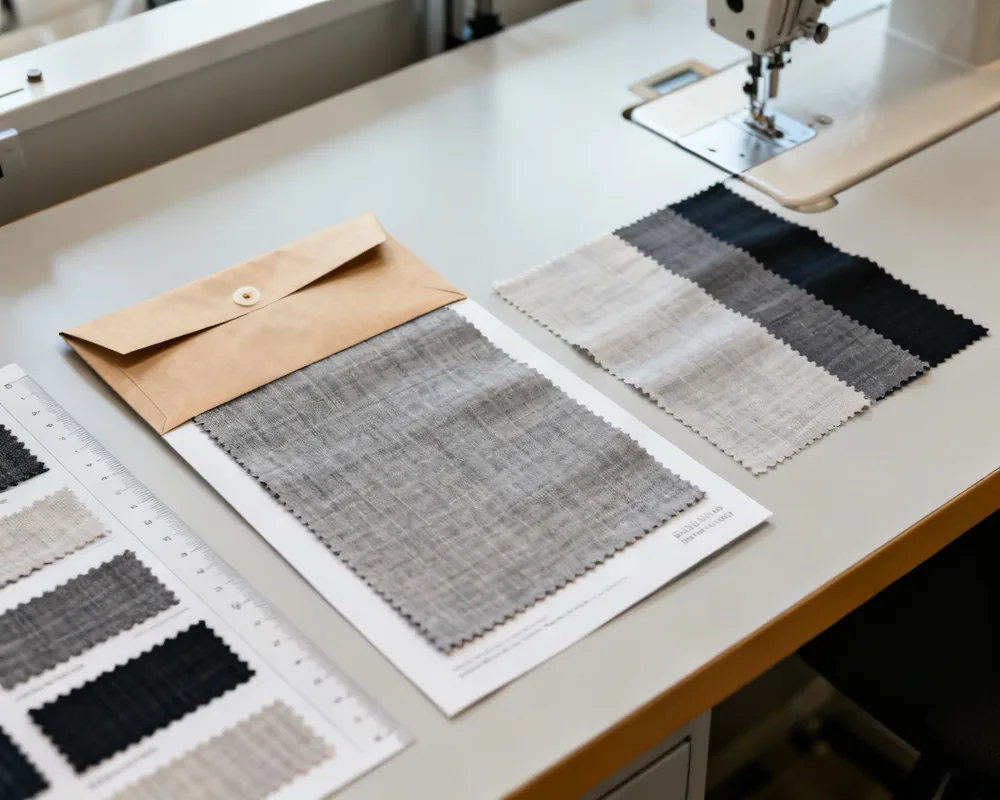
Put the outdoor apparel problem or the separate protective question in the message. A named finish is welcome as a reference. Pair it with the specimen you actually have. Composition and construction come before adjectives. If you know GSM, write the unit. If you know usable width, separate it from the full cloth width and from the selvedge. Finish and shade belong together only when both describe the same cutting. Quantity and destination explain the scale of the conversation. They do not reserve cloth and they do not set a date.
Water resistance and vapor movement, when either matters, need their own sentences and their own method names. Hydrostatic pressure can be ISO 811, reported in mm or kPa. Water-vapour resistance can be ISO 11092, often as Ret. Air permeability can be ISO 9237. A coating and a laminate are different builds: discuss add-on and flex for a coating, and the membrane plus the bond line for a laminate, and only when the cutting actually has that layer. A plain knit does not gain a coating because the end use is outdoors. Mass, if you already know it, stays in g/m²; woven mass methods include ISO 3801. Composition shares should sum to 100% by mass. A phrase such as schoeller coldblack fabric or schoeller dryskin fabric can be copied from your file so we see the words you are using. Follow it with the sample state: greige, finished, washed, or still unknown. If the protective question is only a possibility, keep it after the apparel note so the two assessments are not merged. Roll length in metres, a cut length, or another supply unit can be mentioned when you know which format applies. Leave it out when you do not. If the report names a standard atmosphere, ISO 139 is commonly 20 °C and 65% relative humidity. Those method names are questions, not results held by this page.
There is no published street address, switchboard or hour list on this page. The form is the enquiry route. Write the decision that is blocking the shortlist, and leave fields you cannot support as questions rather than estimates.
Share the current material and the intended difference. Name the reference you can point to, then the change you want judged: recovery, surface, width, or a finish that still needs a record. If you are comparing two cuttings, say what should stay the same. The fields below are the same enquiry form used in the compact dialog elsewhere on the site. Here they sit under the checklist, after the desk image, so the brief has room for construction notes.