The $4,800 'Lyocell' Order: A Purchase Manager's Field Notes on Fiber Spec Mistakes
2026-11-20 · Jane Smith
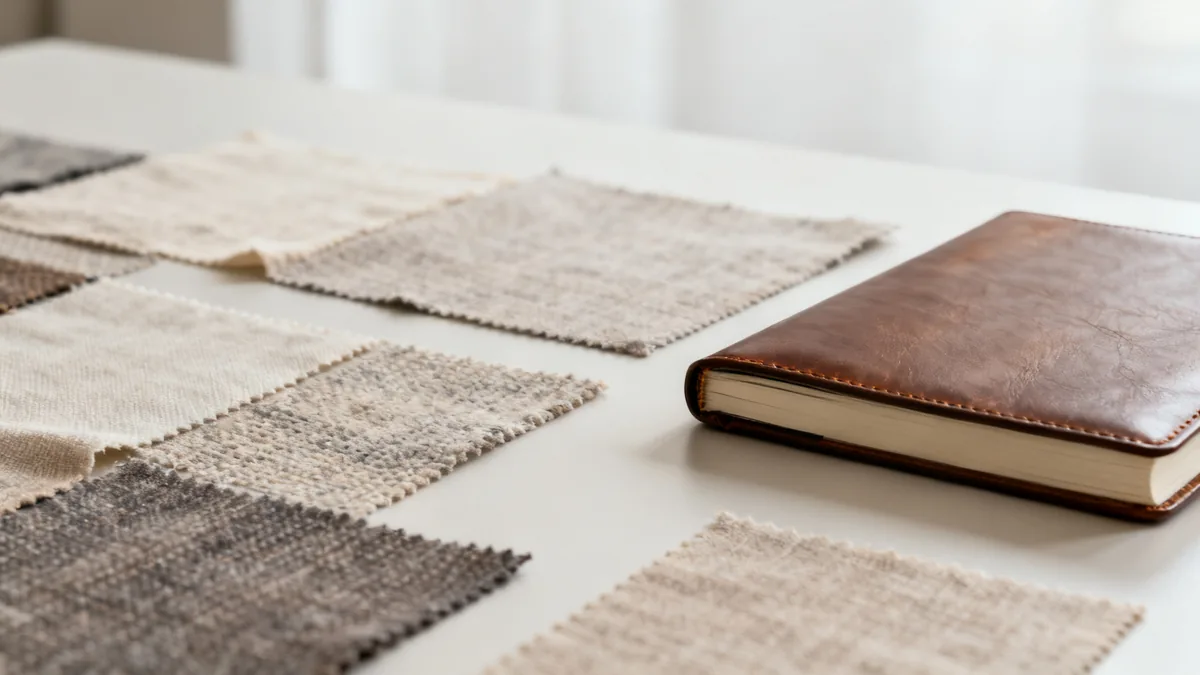
I've been handling functional fabric sourcing for a mid-size outdoor apparel brand for about 9 years now. In that time, I've personally made — and documented — roughly 15 significant buying mistakes, totaling around $120,000 in wasted budget. I keep the list because I train every new hire on it, and because my old boss once told me that a mistake you don't write down is a mistake you're going to make twice.
The one I keep coming back to cost "only" about $4,800. That's not the biggest number on my list. But it's the one that taught me the most about how this industry sells fiber.
It was October 2023. I approved a 1,200-meter order labeled "lyocell fabric" at roughly $4 per meter. Not the cheapest quote we got, but close. The supplier confirmed the spec, I signed off, and we moved it into production planning for a spring softshell line.
What arrived three weeks later was not what we sampled.
What I Thought the Problem Was
When the first rolls came in, I assumed we had a dye lot issue. The hand-feel was close. The drape was close. But the shade ran warm and the shrinkage after wash was about 1.5% off from our approved sample. Our garment dye house flagged it before cutting, which is the only reason the damage stayed at $4,800 instead of winding up in finished goods.
My first instinct — very on brand for me — was to blame the mill's dye house. Then I checked my own paperwork.
The PO said "lyocell fabric." The mill's spec sheet said "regenerated cellulose fiber." Nowhere on either document did it say which one.
The Part Nobody Explains Up Front
Here's what I didn't fully understand until I sat down with our technical director after that mess. Lyocell and viscose are both regenerated cellulose fibers. They come from wood pulp, and on a spec sheet they can both hide behind the same fuzzy category. But they are not the same fiber, and they don't behave the same way.
Lyocell is made through a direct solvent process (NMMO). The cellulose is dissolved and regenerated with a much higher degree of polymerization control. What you get in the finished lyocell fabric is high wet strength, low shrinkage, good moisture management, and a cleaner drape that holds up through repeated washing. The list of lyocell fabric characteristics is long, but for apparel the key ones are dimensional stability and the way it takes dye.
Viscose — and if you've ever asked "what is viscose fabric" and gotten a vague answer, this is why — goes through the older xanthation process. It's cheaper to make, it's been around since the late 1800s, and it behaves differently in dyeing and finishing. Softer, yes. But weaker when wet, and prone to shrinking more in the wash.
If you're ordering at the sample stage, the gap doesn't bite. You're buying small quantities from a supplier who knows what you tested. At production volume, with a quote-driven sourcing team, that gap gets expensive fast.
An informed buyer isn't a difficult buyer. An informed buyer is a buyer who doesn't come back angry six weeks later.
The Mistake Underneath the Mistake
But the real lesson wasn't "lyocell vs. viscose." It was that I let a marketing label stand in for a spec. The supplier had every incentive to write "lyocell fabric" on the quote — it sounds premium, and honestly, most of the fabric in the market that gets called lyocell is a viscose blend or a lyocell-viscose hybrid. I should have known better. I did know better, on some level. I just didn't slow down.
I think about this every time I see how the serious mills name their products. Walk through a Schoeller line card and you won't find a single product called "performance fabric." You'll find schoeller dynamic fabric, dryskin, coldblack — names tied to a specific construction, a specific function, and a specific test protocol. That's not clever branding for its own sake. Schoeller textiles are named that way because in technical fabric, the name has to mean something the buyer can hold the mill to. A vague name protects the seller. A precise name protects the buyer.
Once I understood that, I stopped approving POs based on quote-sheet language and started requiring fiber content, percentage breakdown, and the actual manufacturing route on every spec line. It sounds obvious. It wasn't obvious to me at 6 PM on a Friday in October 2023.
What It Actually Cost
The 1,200 meters were unusable for the intended garment. We couldn't return it — the mill argued, correctly, that the spec we approved didn't rule out the fiber they shipped. Fair enough.
We ate the $4,800. We also lost about three weeks re-sourcing from a mill that could provide the exact lyocell content we needed, which pushed our sampling deadline and put the spring line behind schedule by roughly 12 days. The number I still remember is $4,800, but the number that actually hurt was the calendar.
What I'd Tell Anyone Doing This Job
I don't have a magic checklist. I have a boring one, and it works. Here's what's on it:
- Never approve a fiber by its trade name alone. "Lyocell," "bamboo," "modal," "eco-viscose" — these are labels. Ask for the fiber percentage and the manufacturing route on the mill's own spec sheet, signed.
- Test the sample at production scale. A 5-meter hand sample will not tell you how the fiber behaves through your dye house's bath. Get a done-in-production dye trial before you commit to 1,000+ meters.
- Write the shrinkage and wash spec into the PO. If it isn't on the PO, it's a conversation, and conversations don't survive a mill change.
- Treat premium-sounding phrasing as a red flag, not a green one. If the quote sheet says "performance cellulose," ask what that actually means. If it can't answer, that's the answer.
That's it. None of it is sophisticated. The $4,800 order taught me that the distance between a smooth purchase and a catastrophic one is usually one document line — and whether anyone on the buying side is paying attention to it.
If you're newer to this job than I am, take the shortcut I didn't take: read the fiber spec, not the marketing name. Your dye house will thank you. So will your calendar.

Jane Smith
I’m Jane Smith, a senior content writer with over 15 years of experience in the packaging and printing industry. I specialize in writing about the latest trends, technologies, and best practices in packaging design, sustainability, and printing techniques. My goal is to help businesses understand complex printing processes and design solutions that enhance both product packaging and brand visibility.